
What Even is 'Good at Art'?
Updated: Jun 26
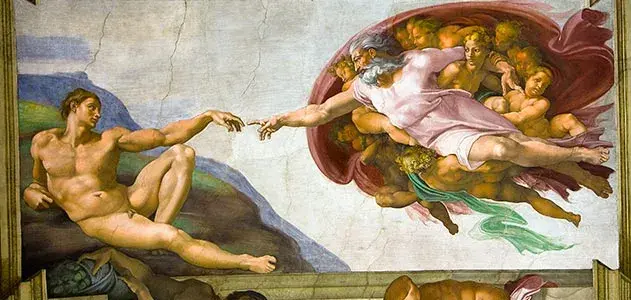
Was Michelangelo good at art? I imagine most people would say 'yes' without pausing.
What about Joan Mitchell? Here, I believe many people would hesitate.

How about Millais?
Or Monet? ... Matisse?

Even if we agree they are all 'good', it's clear that they are not good in the same way.
Michelangelo pursued anatomical mastery and the structural logic of the body while Mitchell’s work is rooted in gesture, movement, and the physical encounter with paint.
Millais worked toward precision, observation, and an almost forensic level of finish; Monet was preoccupied with light, atmosphere, and the instability of perception itself; Matisse reduces and reorganises form in order to privilege colour or line. They are all moving in different directions.
And yet, when it comes to our own art, many of us continue to hold a narrow and punishing internal criterion for success: ‘'Is it realistic?'
Part of this is cultural. Within schooling, realism is legible. It can be assessed, compared, and praised with relative ease. The child who can draw 'properly' is identified early, and the ‘good at art’ label tends to stick. Over time, accuracy becomes conflated with ability.
But there is something we tend to overlook when we judge ourselves in this way: how we are innately oriented to make art in the first place.
In art education theory, it has long been observed that individuals tend to fall somewhere on a spectrum between what the theorist Victor Lowenfeld termed the ‘visual’ and the ‘haptic’.
People at the visual end are primarily concerned with how things appear. Observation, proportion, spatial relationships, tonal structure, and likeness take precedence. The external world provides both the subject and the organising logic.
At the haptic end, the emphasis tends toward sensation and experience. Touch, movement, rhythm, material, colour, and emotional intensity are central. The work is less about describing the world and more about registering a felt encounter with it.
This is not a binary classification, it's a continuum, but everyone innately has a clear leaning.
Personally, I lean strongly toward the visual end of the spectrum. As a child, I was praised early for my realistic drawings. I fitted, quite neatly, within the prescribed category of 'good at art.'
And so drawing became the thing I could rely on, and I held onto it accordingly. A pencil offered control, clarity, and a direct route to accuracy. Paint, by contrast, eluded me - it moved, spread, slipped out of line. It introduced variables that were harder to regulate and therefore harder to reconcile with a naturalistic aim. To be honest with you, it scared me.
Then, at the point Lowenfeld would describe as the 'Crisis of Adolescence', when art-making opens into self-expression, exploration, and a more personal artistic identity, my practice was interrupted altogether. I gave up art in favour of A-levels I had little interest in pursuing.
I was not unique. Many people stop making art around this threshold. And an even greater number stop earlier, at the 'Pseudo-naturalistic' stage, when the gap between what they want to draw and what they are able to make becomes frustrating, and they begin to say, 'I can’t draw'. Sadly, many people are also told this by a teacher or a parent.
When I eventually returned to art later in life and decided to learn to paint, I realised something: psychologically, I had never moved beyond that 'Crisis of Adolescence' stage - I was still frightened to experiment. Frightened of losing realism. Frightened that if I loosened up, simplified, abstracted, or became expressive, people might think I simply wasn’t ‘good at art’. In other words, I still carried the adolescent belief that realism is proof of legitimacy.
But as I became attuned to paint and was able to make it behave with the same descriptive accuracy as pencil, I relaxed - and with that, slowly but surely, the defensiveness fell away. Freed from the requirement to demonstrate competence, I could begin to engage with the medium on its own terms. Paint became less a vehicle for imitation and more a substance with its own properties and possibilities. I became interested in how it could be layered, interrupted, smudged, smeared, or sanded back. How a surface might be constructed and then partially dismantled. How an image could hold two registers at once: the illusion of form and the visible trace of its making.
This did not represent a complete departure from my visual orientation - observation, structure, and likeness remain central to my work - but alongside them sits a second line of enquiry: how to sustain the material presence of the painting itself; how to allow the viewer to oscillate between reading the image and recognising the surface, the marks, the revisions, the decisions embedded within it. That shift, from control to engagement with the material, was where my work became more 'me'. In a sense, I had relinquished being 'good at art' and found my place on the spectrum.
So, if you are someone returning to art, please know that some people come alive through careful observation and realism while others find their way through colour, expressive marks, collage, texture, pattern, or abstraction. And some people - like me - will end up integrating both the visual and the haptic to find their voice.
None of this is better or worse - it's simply being closer to the way you were born to make art.
So now let’s get back to our famous artists. Comparing Michelangelo to Mitchell and asking who is 'good at art' becomes a pointless question.
And, crucially, if you're asking yourself 'am I good at art?', a more salient question might be:
“What is my artistic orientation?”
And after that:
“And what kind of artist will I become when I accept myself and allow myself to explore?”


Comments